
Wooden theatres, made by hand.
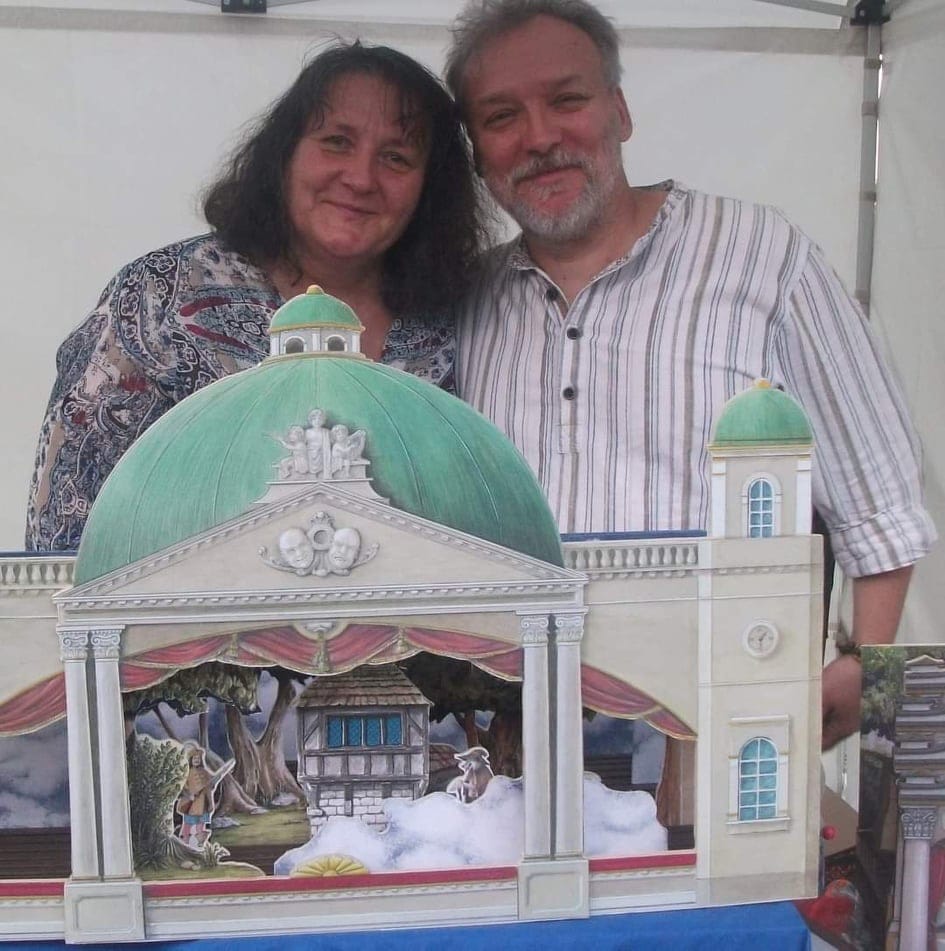
BalDor is the workshop of Balázs Szekrényessy and his wife Dóri. The name is made from our two first names.
Balázs is a typographer and book designer, for many years the art editor of a magazine. Dóri teaches Hungarian and art, and is a librarian. Books, pictures and stories were always our work, and the theatres grew out of all three. Balázs draws and paints every piece and cuts each one out himself; Dóri is the storyteller.
Magyar Kézműves Remek 2020The Hungarian Craft Masterpiece award of the Hungarian Chamber of Commerce and Industry, with its highest distinction, Remekek Remeke.
How it started
We have five children, and while they were small we lived among stories: we read, drew and made puppets with them. We still keep their first puppets, and Cinca, a lanky cloth mouse whose every move made them laugh. For a Christmas show the children built the marionettes and the scenery with us, and the best of it was making it together.
The first BalDor puppets were marionettes of wood, wool and papier-mâché. Balázs made the bodies and heads; Dóri designed, sewed and felted the costumes. We sold them at craft fairs. At one, during the Visegrád palace games, a boy crossed the Danube with his parents early the next morning to buy the marionette he had chosen the day before. Our puppets and theatres have since found homes in America, Canada, Australia, China, Vietnam and across Europe.
From paper to wood
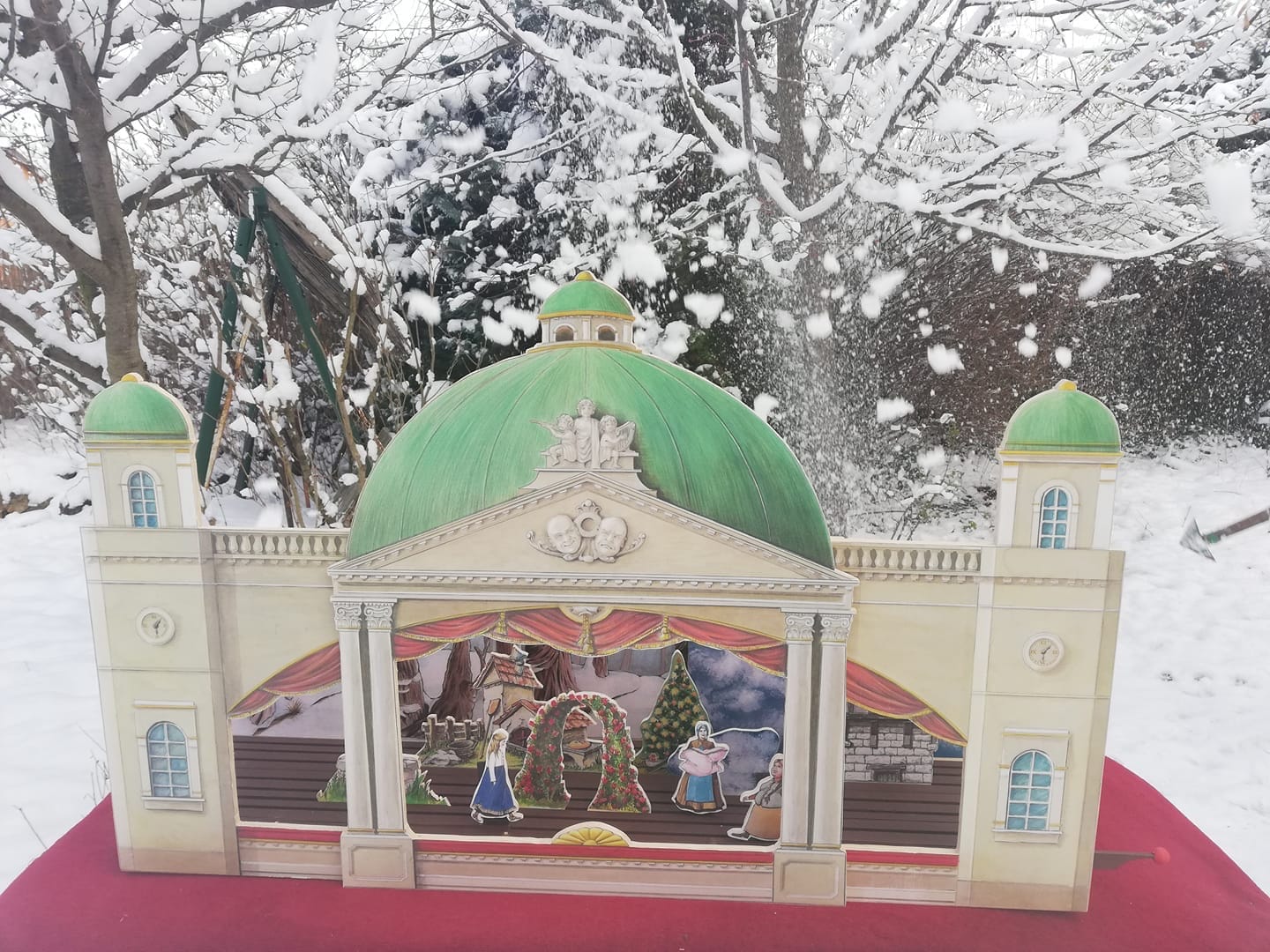
The idea came from the paper theatres of the nineteenth century. They let people play at home what they had seen in the great theatres and opera houses, and brought the theatre to families who never got there. The sheets were printed in black and white, later coloured by hand, by stencil or by lithography, and families glued them to card, cut them out and put on their own shows.
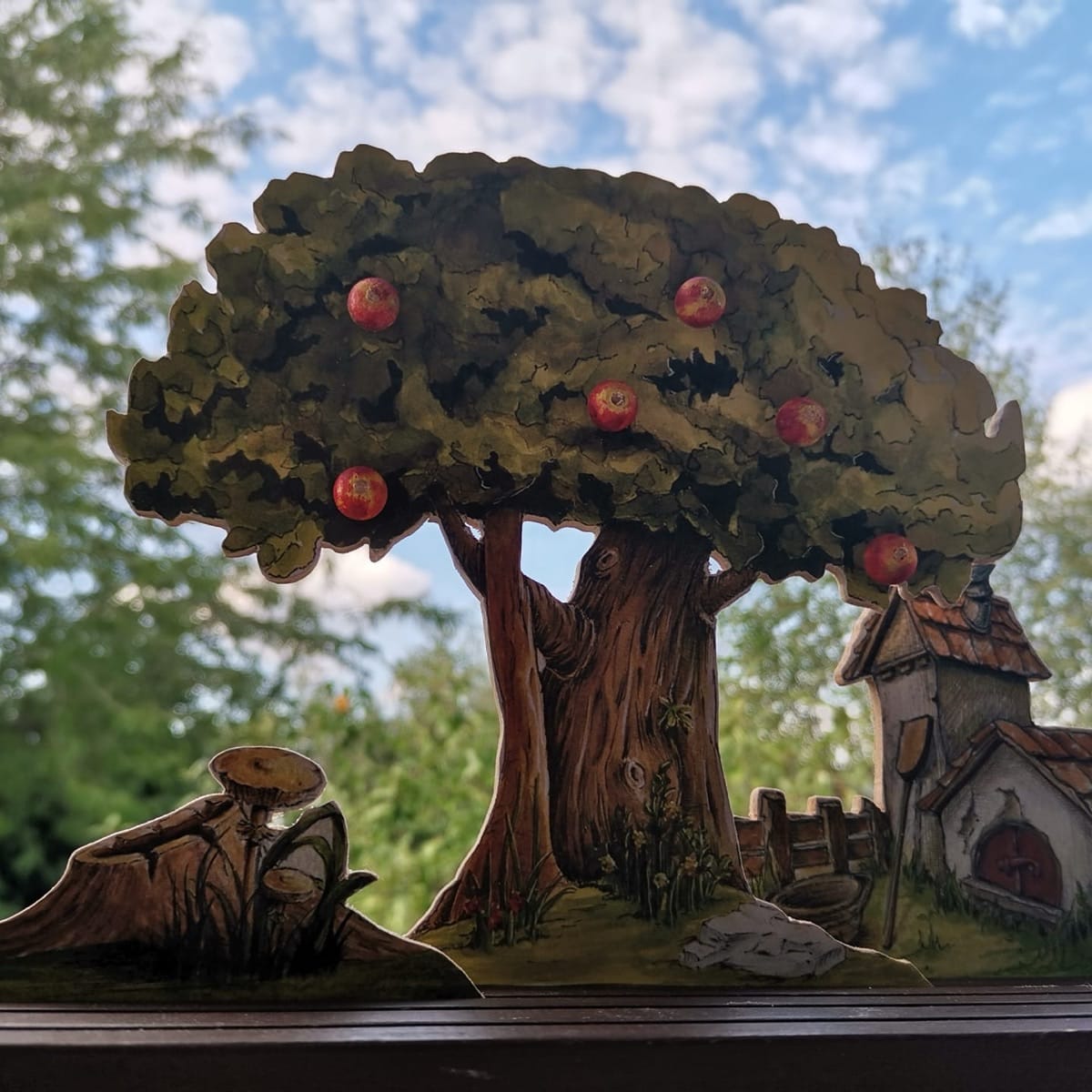
We had a paper theatre of our own. We loved cutting it out and putting it together, but the pieces creased, tore and went missing, and a draught once did lasting damage. So the stories Balázs drew needed a material that lasts for generations: birch and beech plywood. It took several years of trying to find a shape that anyone can play with easily.
How a piece is made
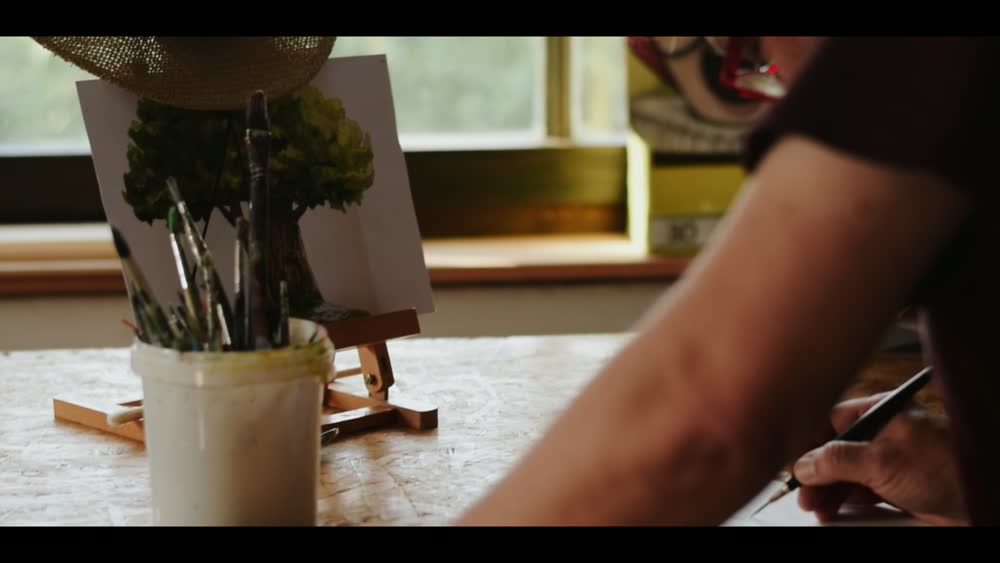
Every piece of a set, from the arch of the theatre to the smallest figure, goes through the same six steps at the workshop table.
Sketch
Pencil drawings of each figure and piece of scenery, modelled on family, friends and our animals.
Watercolour
Balázs paints every one by hand.
Print
The paintings are printed in offset.
Mount
Each print is laid on 4 mm birch or beech plywood.
Seal
A water-based lacquer protects the colour.
Cut
Every piece is cut out by hand, not by laser.
On the stage
Each figure is held on its rod by a strong magnet, so figures change places in a moment, and the rod works as well in a left hand as in a right. The idea came from Vietnamese water puppets, which glide across the water the way ours glide across the stage.
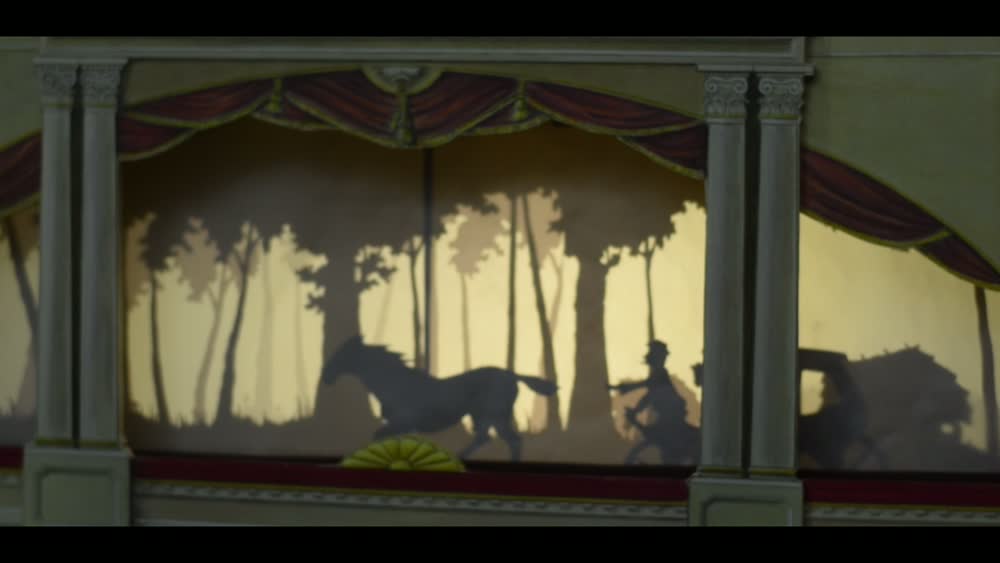
The theatres also turn into a shadow theatre: a frosted screen behind the scenery takes paper silhouettes, or the shadows of the wooden figures themselves.
Who plays with them
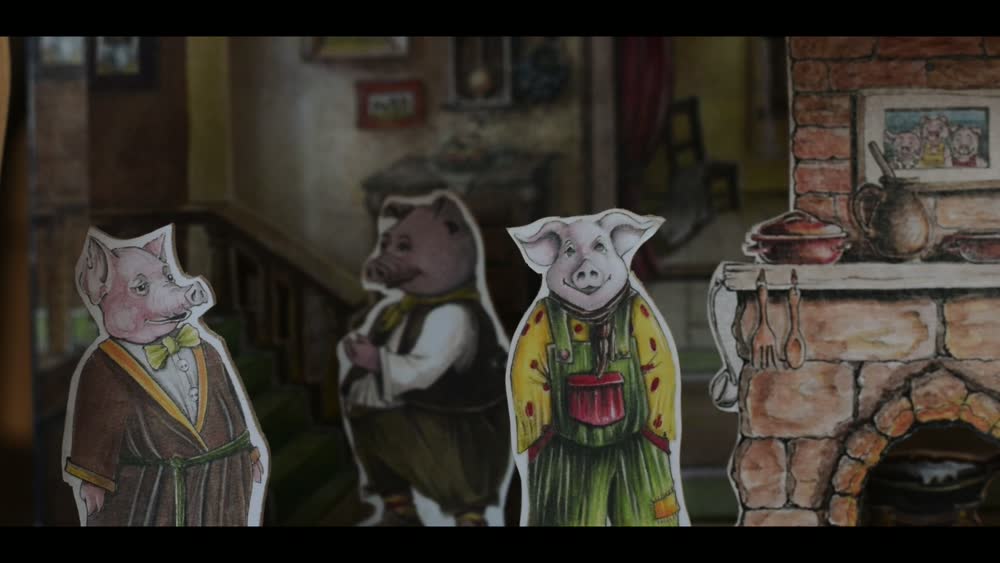
Families, mostly. Grandparents recognise the pop-up picture books of their own childhood. We expected small children to love the theatres; then the leader of a group of teenagers wrote to tell us that they did too.
Nursery and school teachers asked for a bigger theatre, so there is a table-top one, 70 cm wide, that four or five children can play at once while the rest of the group watches. Speech therapists use the theatres because children who find speaking hard often open up through a puppet, and story therapists, special-needs teachers and religious-education teachers use them too.
Once you take it out of the box, you won’t want to put it back.
The sets
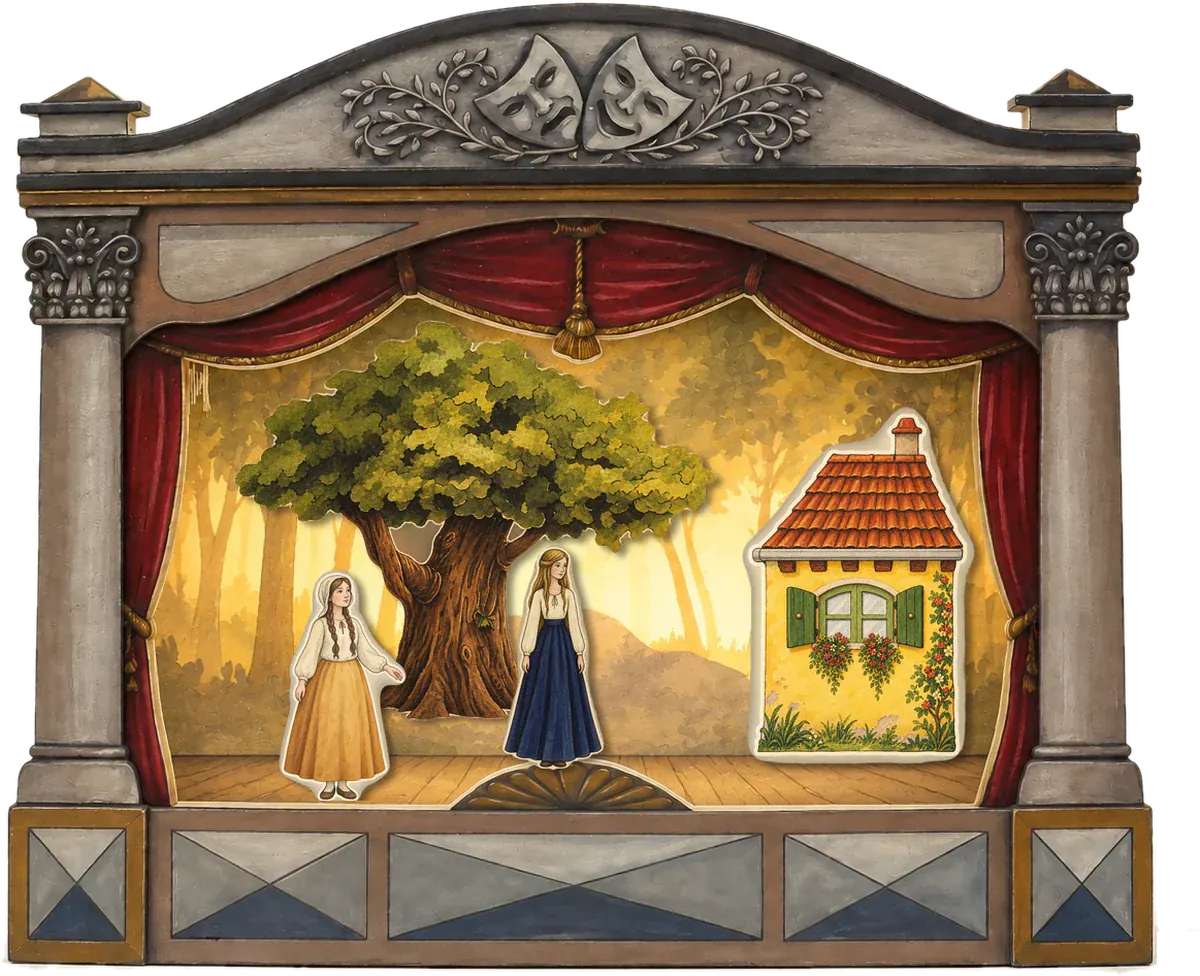 Mother Holle
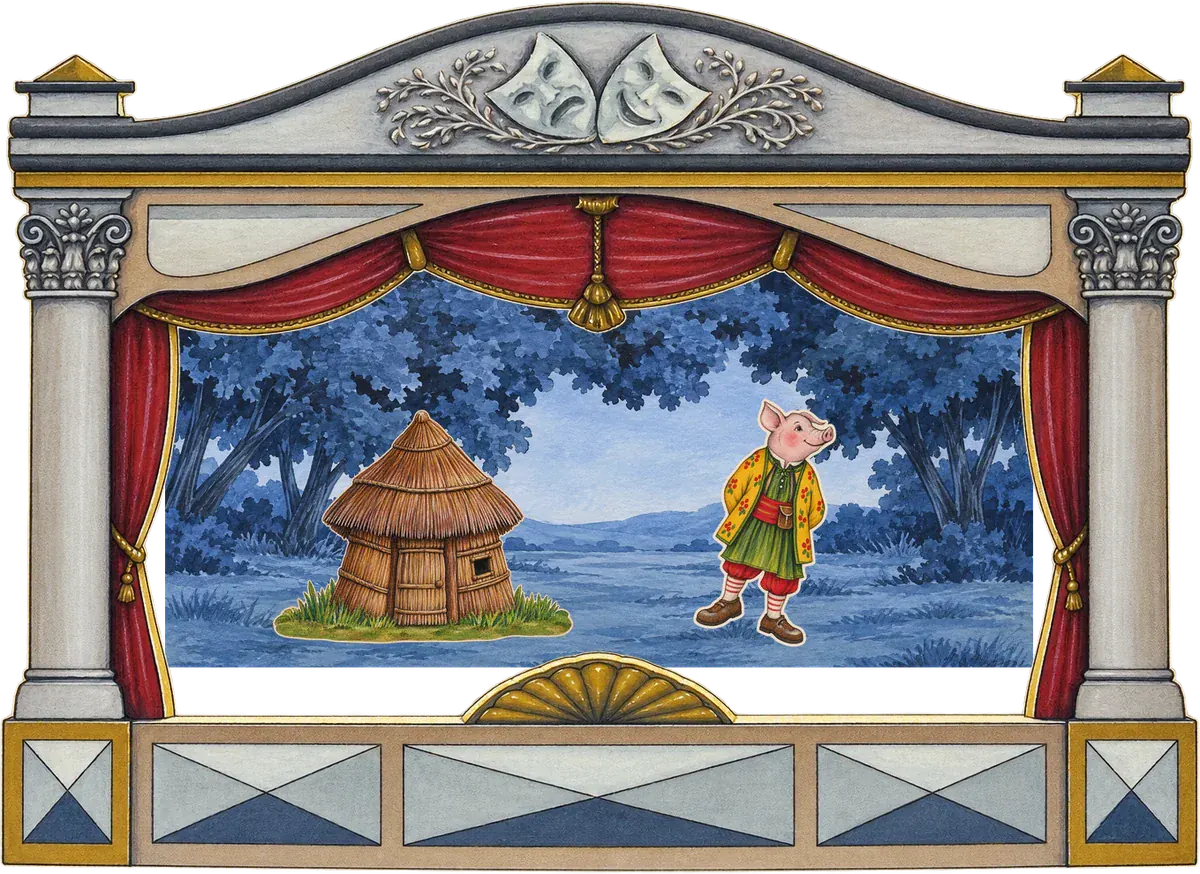 The Three Little Pigs
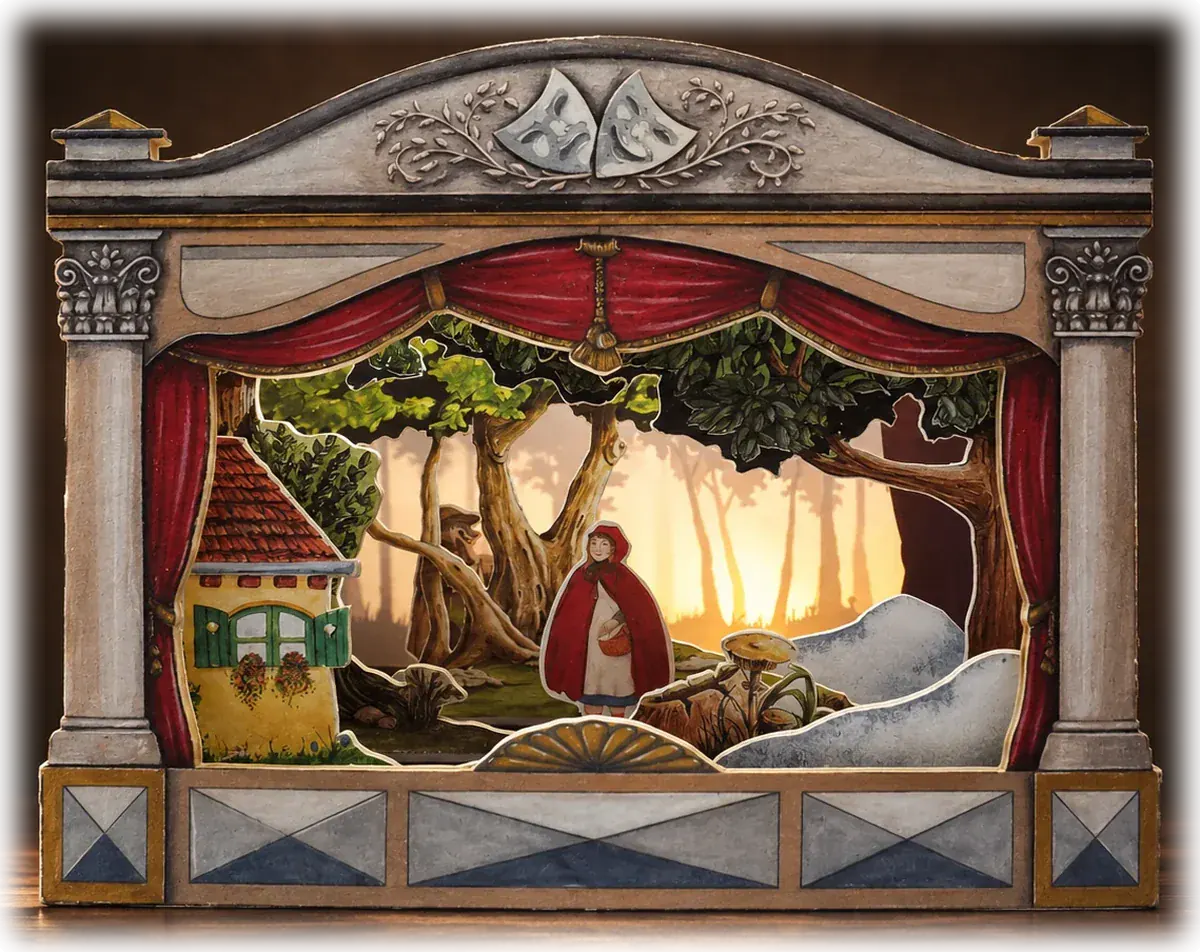 Little Red Riding Hood
Write to us
Questions about a set, a gift or a delivery are welcome: baldorpuppet@gmail.com.
We also run puppet-making workshops, from shadow play through rod, hand and bunraku puppets to marionettes, mostly in papier-mâché. We have taken them to schools in Hungary and southern Slovakia, and to Hungarian schools in England. News from the workshop goes up on Facebook and Instagram.